
How Glass Neon Signs Are Made: The Hand-Bending Craft
A glass neon sign is made by hand, one tube at a time. A skilled bender heats lengths of glass tubing over a flame, bends them by hand to follow a drawn pattern, fits an electrode at each end, purges and fills the tube with gas, then ages, finishes, and mounts it. It is an old craft, and the way it is done has barely changed in a century.
At Echo Neon we still make glass this way, by hand, which is part of why we can walk you through it honestly. This is the full process, stage by stage, from a straight stick of glass to a finished, glowing sign. For the shorter version and how it compares to LED, see how neon signs are made.
The Craft and the Bender
Before any glass is heated, it is worth knowing who does this work. Bending glass neon takes years to learn. A bender judges the heat of the glass by feel, often without gloves, because feel is the whole skill, and reads the softening tube by eye and instinct. It is hands-on from start to finish, and no two benders work in exactly the same way.
It is also a craft under pressure. As LED took over much of the sign world, many shops closed their glass benches and the skill grew rarer. The benders who keep it going are carrying a trade that is more than a hundred years old. At Echo, glass neon is still bent by hand, and you can see our glass neon work to judge the result.
The Pattern and the Glass
Every glass sign starts as a pattern and a straight piece of glass. The design is drawn to scale on a heat-resistant sheet, which the bender works over directly, laying the hot glass onto the lines to check each curve. The pattern is drawn in reverse, because the bender works from the back of the sign. That way all the joins and connecting tubes end up behind the piece, and the clean face is what you see.
The glass itself is soft lead-glass tubing, usually somewhere between 8 and 15 millimeters across, and it arrives as straight sticks a few feet long. Everything that follows is the work of turning those straight sticks into letters and shapes.
Bending the Glass by Hand
This is the heart of the craft. The bender heats a short section of the tube over a ribbon burner, a long flame that can be widened or narrowed to match the length of glass being worked. The glass has to reach the point where it softens but does not slump, and once it does, there are only about thirty seconds to make the bend before it firms up again.
In that window, the bender lifts the tube, bends it to follow the pattern, and sets it down to check. The glass is worked in small sections rather than all at once, so it bends where it is meant to and not where it is not. The whole time, the bender blows gently into the open end of the tube, often through a hose, to keep the soft glass from collapsing and to hold its round shape. It has been described as writing without being able to lift the pen, and that is close. The line is continuous, the hand never really stops, and the shape has to come out right the first time.
Electrodes and Welding
A large design is rarely a single piece. The bender makes it in sections and then welds them together, heating the ends with a crossfire or a hand torch until the glass fuses into one continuous tube.
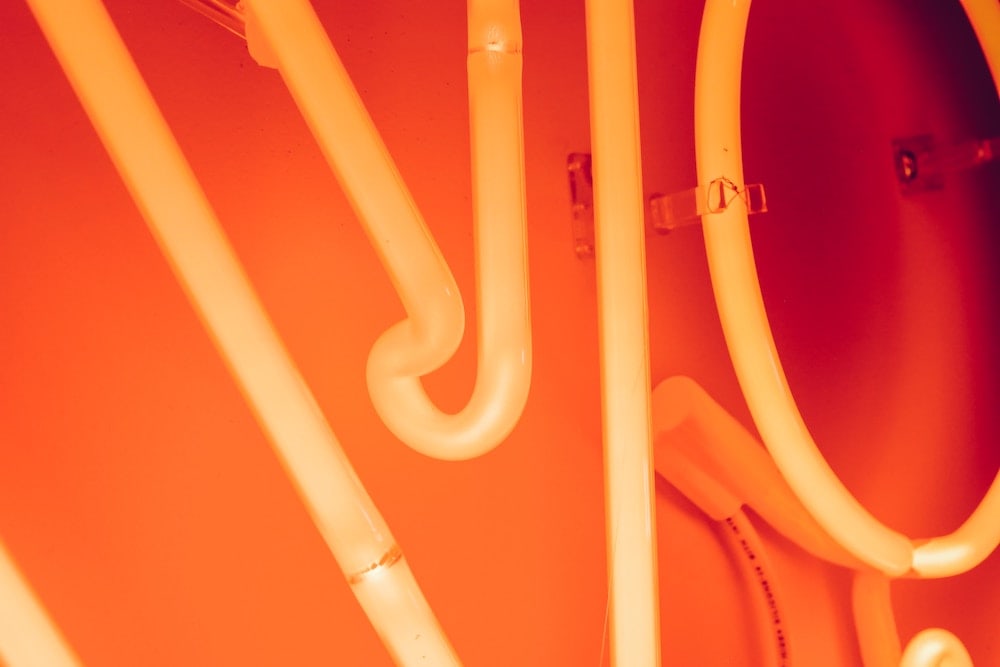
Once the shape is complete, an electrode is fused to each end. The electrodes are the points where electricity will later enter the tube, and they have to be sealed in without a single leak, since any gap lets the gas escape and the sign fails. One electrode is left with a small opening, called a tubulation, which is the connection point for the next stage.
Bombarding and the Vacuum
Before the tube can hold gas, it has to be cleaned, and that is done with electricity rather than a brush. The tube is connected through its tubulation to a manifold, a set of valves controlling a vacuum pump and the gas supply. A heavy electrical current is then driven through the tube in a process called bombarding. It heats the glass and the electrodes enough to burn off impurities and moisture left inside, while the pump draws the air out and pulls a vacuum.
This step is not glamorous, but it is what makes a sign last. A clean, well-evacuated tube can glow for years, while a dirty one fails early. Spacers are placed between close bends during the heating so the hot glass does not sag and touch itself.
Gas and Color
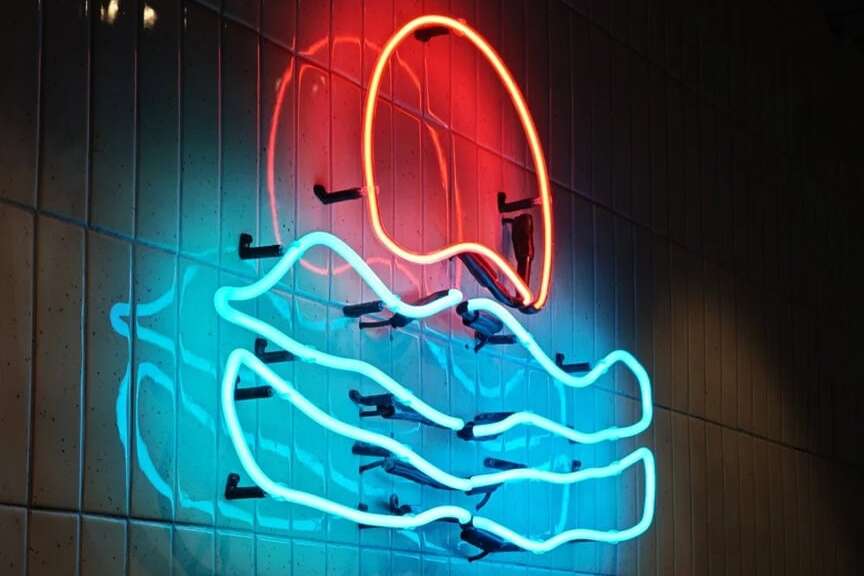
With the tube clean and under vacuum, it is filled with gas at low pressure and sealed. The gas is what glows. Neon gas gives the warm red-orange that the craft is named for, and argon gives a cooler blue. From those two, the palette opens up: tubes made from colored glass, or coated on the inside with phosphor powders, turn the same gas into a wide range of colors. A blue-glowing gas inside a yellow-coated tube, for instance, reads as green.
One note on materials. Some traditional neon has historically used a small amount of mercury to brighten certain colors. At Echo, our glass is mercury-free, and the color comes from the gas, the glass, and the coatings instead. For more on the format itself and what it looks like lit, see glass neon signs.
Blockout, Aging, and Testing
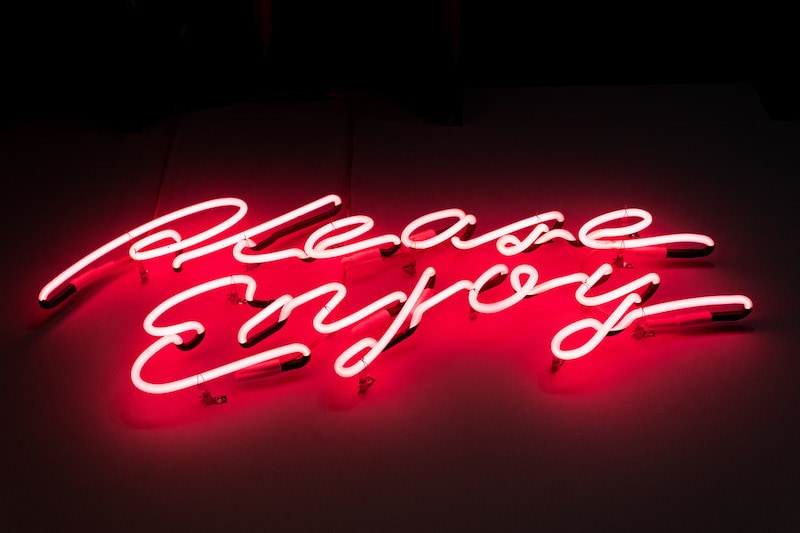
A finished tube has connecting runs between the letters, the parts the bender worked from the back. Those are hidden with blockout paint, an opaque coating brushed over the sections that are not meant to show, so only the intended shapes appear to light up.
Then the sign is aged, sometimes called burning-in. The tube is run at a current a little above its normal level for a while, which settles the gas and brings it up to full, even brightness. A neon-filled tube settles quickly, while an argon tube can take longer. Finally the sign is tested. The bender checks for dead spots, uneven glow, or the wrong color, and corrects anything that is off before it goes any further.
Mounting and Wiring
The last stage turns the tube into a sign you can hang. It is mounted onto a backing and held with supports that keep it clear of the surface, then the electrodes are wired to a transformer that supplies the high voltage the gas needs. After a final check, the sign is ready. For how a finished sign goes up on your wall, see how to install a neon sign.
Have a Glass Neon Sign Made by Hand
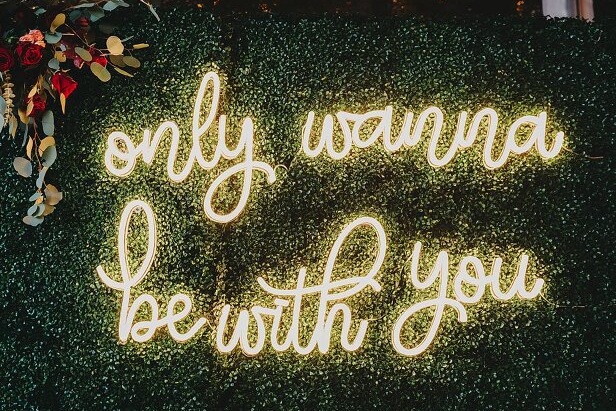
Knowing the work behind a glass sign is part of what makes owning one worthwhile. If you want the real thing, hand-bent and gas-filled, you can design a custom glass neon sign in your own words, color, and size, and it will be made through the same process described here. To see the craft in finished form first, browse our gallery.
Frequently Asked Questions
By hand. Glass tubing is heated and bent to a pattern, electrodes are fused to each end, the tube is bombarded and vacuumed clean, then filled with neon or argon gas, aged, finished with blockout paint, and mounted on a backing wired to a transformer.
A bender heats a section of the tube over a ribbon burner until it softens, then bends it by hand to follow a pattern, blowing into the tube to keep it from collapsing. There are only about thirty seconds to make each bend before the glass firms up again.
Yes, entirely. Every bend is shaped by hand by a skilled bender, who judges the heat by feel. No machine can replicate it, which is why each glass sign is slightly unique. At Echo, our glass is bent by hand.
It depends on the design. A custom glass sign is hours of skilled hand work, plus the time to bombard, fill, and age the tube. It is worth allowing time for a custom piece rather than rushing it.
Neon gas, which glows red-orange, or argon, which glows blue. Colored glass and phosphor coatings expand the range of colors. Echo Neon’s glass is mercury-free.
LED neon uses flexible LED tubing mounted on an acrylic backboard, with no gas and no glass bending. It is faster to make and easier to repeat. See how LED neon signs are made.
Because it is hours of skilled hand work, not a printed or machine-made part. The bending, processing, and finishing all take time and a trained hand. See how much neon signs cost.
A Sign Made Entirely by Hand
Every glass neon sign is the product of this sequence: a pattern, heated glass bent by hand, electrodes, a clean vacuum, gas, and a careful finish. It is an old craft, and at Echo we still do it the same way, one tube at a time. That is what gives a glass sign its depth, and why each one comes out a little different.
To see how the formats compare and the rest of the picture, head back to how neon signs are made.